
How to Reward Employees to Boost Their Motivation
Case Study: Implementation of WinWin at Wawel
What needs arose at Wawel?
Did the implementation succeed in reconciling the expectations of the company, managers, and various groups of production workers?
The Wawel production plant employs workers from all generations, ranging from baby boomers to millennials to Gen Z. This great diversity presents challenges when it comes to building engagement—it’s well known that what works as an effective tool for motivating employees over 50 doesn’t necessarily work for a group of twenty-somethings.
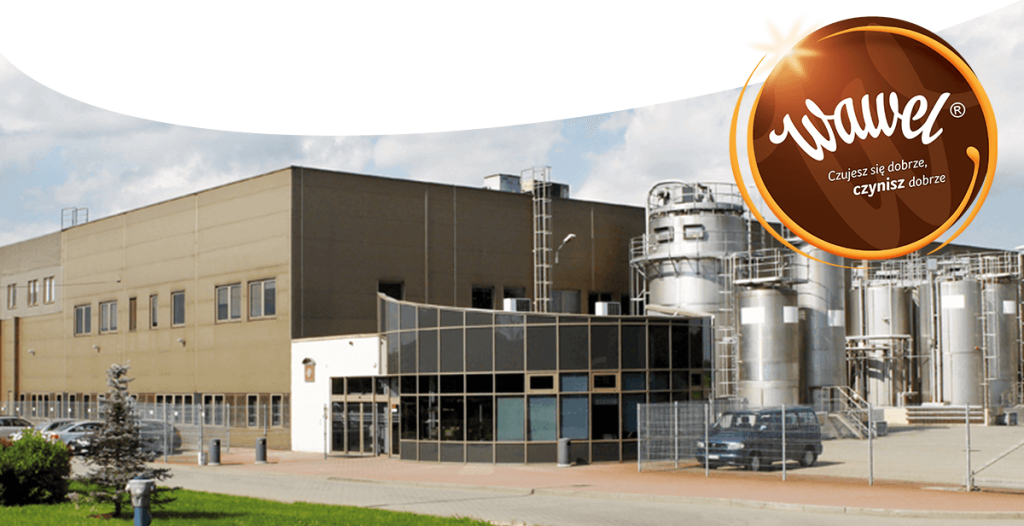
Wawel is one of the oldest confectionery manufacturers in Poland. The company boasts a tradition dating back to the late 19th century. It currently employs nearly 1,000 people, including more than 600 at its production facility in Dobczyce, near Kraków.
An Application Tailored to Production
The Situation Before Implementation
Wawel, like many manufacturing plants, had employee evaluation tools, but these applied only to selected office departments, specific sales levels, and foremen. Front-line production workers were excluded from this evaluation; there was no mechanism or individual incentive tools other than a discretionary bonus granted to each team member without a clear link to their contribution to the profit generated (the only exceptions were negative or undesirable incidents that resulted in the withholding of the bonus).
The WinWin System
The company has focused its attention on the WinWin app, which allows for the daily recording of actual events and facilitates the provision of more fair and constructive feedback. Managers award employees points for their performance; this can be a simple “OK” for work that meets standards, a “plus” for outstanding positive behavior, or a “minus” (corrective feedback) with a note on what needs improvement. This ensures that employees receive positive reinforcement or corrective feedback on an ongoing basis whenever something needs improvement.
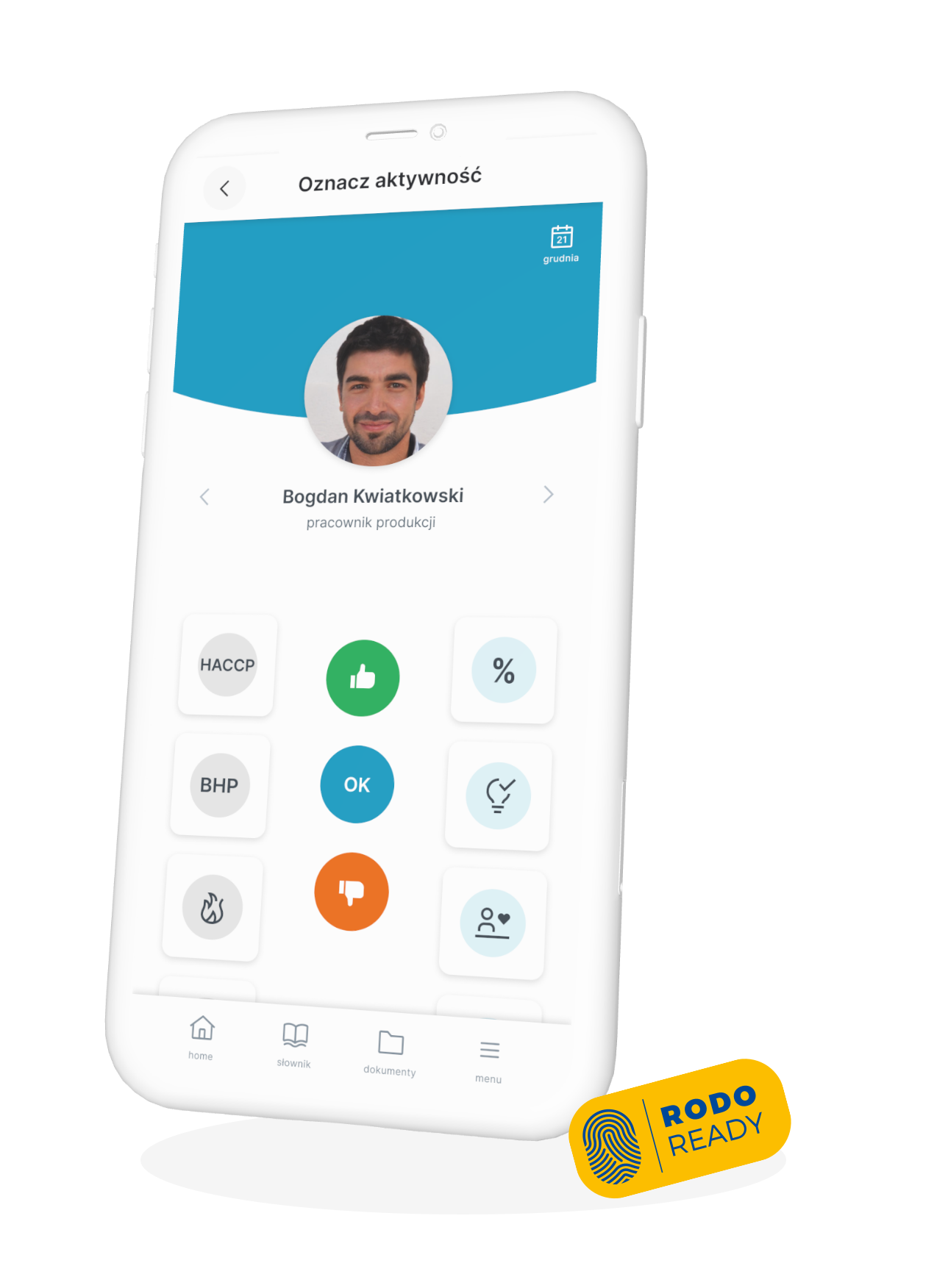
The app caught the attention of Wawel, mainly because it allows each employee to be treated individually. The rollout of the program began with a three-month pilot in the production department, which employs about 300 people. It quickly became apparent that the standard version of the app—in which a supervisor, assessing work performance at their own discretion without using objective external data, simply marks whether an employee worked at 100 percent, below, or above that level—was not sufficient for the company. Wawel decided it would be beneficial to link the application to direct production metrics. An application module developed specifically for the company’s needs made it possible to directly link an employee to a work order and the efficiency of its completion. In this way, the company gained more measurable data on which to base its compensation and employee motivation policies.

First, education and communication
WinWin Implementation
Following the pilot program, the company decided to implement the WinWin application across all production departments. The solution provider began the project by conducting workshops on providing constructive feedback. As Michał Eryk Południok notes, production managers are typically individuals who have been promoted from line positions and often lack the training needed to perform managerial functions; they struggle to give praise and do not know how to use corrective feedback to encourage—rather than discourage—employees from completing their tasks.
Results of the Implementation
During the workshops, we also succeeded in developing engagement criteria—a shared set of behaviors deemed desirable and undesirable for the organization, which was integrated into the application. Competencies such as communication, collaboration, and accountability for one’s work were described in the “language of the masters”—a terminology understandable to everyone and rooted in the organization’s culture and experiences. As a result, providing feedback and awarding engagement points has been standardized and is no longer dependent on the subjective discretion of supervisors. Now, exemplary behaviors across all production teams are recorded in the same way.
According to Michał Eryk Południok, the standards for using the app developed in this way constitute a kind of tripartite social contract. First, with employees: if they behave in the manner outlined in the set of desired competencies, it will be noticed and credited to their account; second, it is an agreement with supervisors that they will systematically record employees’ outstanding behavior, adhering to a jointly established and understood standard, thereby providing them with a tool for motivating employees; and the third party to the agreement is the company, which commits to ensuring that the most outstanding employees will be specifically recognized and rewarded.
WinWin in Everyday Life
As Joanna Sztefko emphasizes, the company devoted a great deal of time to training managers who use the app in managerial skills, to familiarize them with the concept and principles of ongoing feedback. The company wanted to ensure that recording employees’ outstanding behaviors in the app was done systematically, because only then does it make sense. Every foreman must remember to note, after closing a specific job order, how it was completed, giving “pluses” to those who stood out positively and “minuses” to those who stood out negatively. Of course, if there was no reason to commend an employee or issue a warning, the foreman assigns a simple “OK”—after all, employees usually perform their duties correctly. Importantly, praise or corrective feedback cannot be provided exclusively digitally and does not replace a conversation with the employee. Before entering this information into the app, the supervisor should convey it directly to the employee in question.
The system also does not allow for the bulk assignment of “ok” ratings to all employees. As a result, when closing out a task, a supervisor must take at least two or three seconds to reflect on each employee’s work before marking “OK” in the system. An employee may also ask a foreman or manager at any time for access to their account in the app to verify the points awarded. This restriction is imposed by security requirements for access to the company’s IT network and the protection of personal data; however, in hindsight, Wawel views this as a significant communication barrier—one that should be eliminated while maintaining appropriate organizational and technical measures. Ultimately, the company aims to offer production employees access using an individual password and login. Office employees, who are also covered by the system, already have this option on the company network.

Fair means effective
Bonuses and Motivation
When asked about the benefits of implementing the system, Joanna Sztefko first and foremost points to the assurance that, thanks to the data from the application, bonuses are distributed in a more fair and objective manner. The company integrated this data into the existing bonus system in the production departments, which meant that what had previously been based on a supervisor’s subjective assessment was now supported by hard data on the behavior and performance of individual employees. Based on this, a specific bonus metric is calculated for production employees and proposed to the supervisor, who, however, still has the final say in the bonus process.
Talent Scouting
The data also serves as a factual basis for periodic decisions regarding pay raises and promotions. Another benefit resulting from the implementation of the WinWin system is more efficient talent management within the company. Thanks to comprehensive information about employee performance, it is much easier to identify those employees who demonstrate above-average commitment and to plan their career paths in advance. This also applies to various types of initiatives and improvements—by recording them in the system, it is easier to identify employees who stand out for their ingenuity and resourcefulness. Another benefit, which may not stem directly from the system but is certainly a result of it, is that it draws managers’ attention to the process of providing feedback itself.
The Generation Gap
In companies like Wawel, which have their roots in industry and boast over 100 years of history, a culture of continuous feedback isn’t always a given. Many of our employees, especially those of the older generation, have never encountered this before and don’t consider it necessary at all. Younger employees, on the other hand, are eager for it. That’s why, for foremen—who often come from the Boomer or Generation X generations— the introduction of a tool for daily tracking of engagement and performance was a revolution. “We hope the app has helped them understand how important positive feedback is in this context, and that they’ve come to realize that systematically noting outstanding behaviors within the team is a concrete tool for building team engagement and achieving goals,” notes Joanna Sztefko.
Freedom of Choice
The solution provider addresses any concerns that may arise among production employees covered by the system. Michał Eryk Południok emphasizes that the tool gives employees freedom of choice, does not force them to compete, and is not “judgmental” in a negative sense.
When a company begins implementing the application, it should simultaneously convey a clear message to employees that if an employee is not exceptionally engaged but performs their duties correctly, this is a satisfactory attitude for the employer.
Similarly, if the work falls short of standards, the employee’s potential bonus will also be lower. It’s up to the employee to decide which path to take, emphasizes Michał Eryk Południok
Lessons Learned During System Implementation
Fast implementation time
The implementation of the system in its standard version, as Wawel observed during the pilot phase, proceeded relatively quickly. However, our decision to expand the production module significantly extended the project timeline due to the programming work and efforts required to stabilize the system with the new functionalities. As is always the case when weighing the decision between the standard version and a customized version, this issue should be kept in mind, as it affects not only the timeline but, above all, the heavy workload on the departments supporting the implementation within the organization—in our case, the HR and IT departments. “The WinWinBalance team responded very flexibly to our needs, but the complexity of the process and the scope of resource commitment on our company’s part increased significantly,” notes Joanna Sztefko.
The second important factor to always keep in mind when implementing a system related to any form of work evaluation or record-keeping is that the expectations for the system developed by specialists who perform day-to-day office work, senior managers, or executive management will always differ from those of production workers.
Be WinWin
This is simply due to the fact that work in these two environments is extremely different, which leads to differing perceptions of the proposed solutions and their potential applications. While front-line employees evaluate the system from a “here and now” perspective, specialized departments and management expect good reports, summaries, and guidance on people management,” emphasizes Joanna Sztefko.
During implementation, therefore, it is important to keep these two completely different sets of expectations in mind.
“When we focus on meeting the needs of one group, there is a risk that the other group will not have its needs addressed as quickly or effectively as it might expect. In such a large organization, this is an ongoing challenge. That is why we are currently conducting an internal evaluation of the system to maximize its potential,” concludes Joanna Sztefko.
Everyday Challenges
Wawel is a large, stable employer that, like other manufacturing plants, faces challenges in the area of human resources management. This is, among other things, a result of the last two difficult years. The company is working to reduce employee turnover and maintain staffing levels on the production floor. Since the production facility is located near Kraków, the employer has launched additional company bus routes so that employees can easily commute to the factory. Wawel aims to compete by offering good working conditions and transparent compensation; this is one of the reasons it decided to implement an application that enables a more equitable bonus system.
Author: Anna Włudarczyk
This article originally appeared as a case study in the monthly magazine “Personel i Zarządzanie,” Issue No. 1/2023, under the title “Rewards Based on a Solid Foundation: Continuous Feedback at Wawel.” Reprinted with the author’s permission.
Find out what we can do for your organization—let’s talk!
Schedule a meeting and a demo of the [Module Name] module