

In recent years, the principles of Lean Management and Lean Manufacturing have become very popular. The Lean philosophy is based on the effective management of an organization’s resources, particularly its production processes.

What is Lean Manufacturing?
The term “lean manufacturing” refers to changes made to the organization of production processes, supported by a philosophy aimed at minimizing waste and improving efficiency. The origins of this concept can be traced back to the Japanese automaker Toyota and its production methodology, which focuses on kaizen.
Lean Manufacturing is a management philosophy that systematically eliminates waste from manufacturing processes using a set of synergistic practices. Lean Manufacturing is a collection of concepts, principles, methods, procedures, and tools designed to improve production flows without placing additional demands on resources.
10 Principles of Lean Philosophy:
- New challenges mean new opportunities for growth.
- All ideas are equally valuable.
- There is no such thing as “no.” Anything is possible.
- Keep correcting your mistakes.
- There's no end to improvement.
- Consider only solutions that can be implemented.
- Be open to new ideas.
- Ask "Why?" five times to get to the root cause of the problem.
- Choose simple solutions rather than striving for perfection.
- Use your ingenuity instead of money.
The philosophy of Lean Manufacturing is deeply rooted in the belief that by eliminating waste, companies can increase their productivity. The elimination of waste refers to any activity or process that does not add value to a product or service but merely generates additional costs for the company. Therefore, Lean focuses on identifying these activities and systematically reducing them in the production process.
A systematic Lean approach to manufacturing offers many benefits, including improved efficiency within organizational processes, which leads to increased productivity and reduced operating costs. In addition, the Lean philosophy enables management teams to obtain the valuable data necessary for decision-making.
How to Implement Lean in a Manufacturing Company?
We have already discussed the goals and principles of Lean management. Now let’s examine how these concepts are commonly put into practice. Implementation typically follows a set approach and includes the following key elements:
- Appoint a dedicated individual responsible for overseeing the implementation of Lean practices, such as Lean management or Lean manufacturing. This person is responsible for providing employees with appropriate training in Lean methodology.
- Implement a structured system for submitting suggestions for improvement, which can be submitted both on paper and electronically. Employees can submit their ideas to a dedicated Lean suggestion box or directly through WinWin to the person responsible for implementing Lean practices.
- A decision-making process to evaluate and determine whether to accept or reject proposed changes. The decision may involve the person responsible for implementing Lean, other employees, or the supervisor of the person making the proposal, depending on the nature of the proposed change.
- Implementing accepted changes based on approved proposals. Once an idea is accepted, the necessary steps are taken to implement the suggested change.
- Communicating information about accepted proposals and recognizing and rewarding individuals for their outstanding contributions to the implementation of Lean practices. This serves as motivation and fosters a culture of continuous improvement.
Lean Employee Suggestion System – this is where WinWin comes in.
The employee suggestion system focuses on collecting ideas and suggestions from employees involved in production processes. To this end, a visible and easily accessible Lean suggestion box is placed in a prominent location, or the WinWin system is implemented. Employees can fill out forms with suggestions for improvement and submit them via the app. Although this method is relatively simple to implement, it requires training all employees on how to use the app.
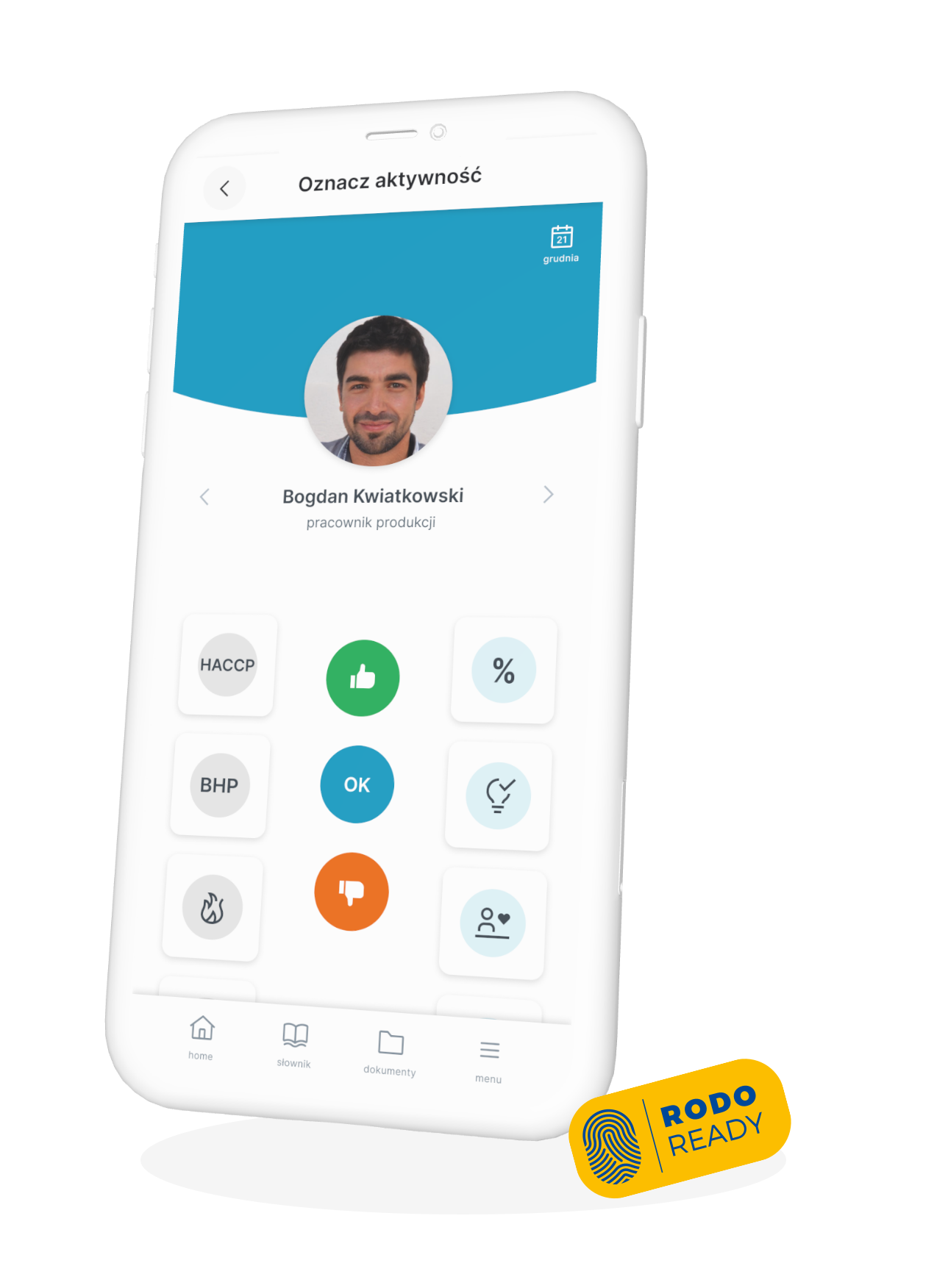
The WinWin system includes a module that allows employees to submit initiatives, stores them, and provides real-time insight into their implementation status. Additionally, through the use of Continuous Feedback, it serves as a practical tool for improving efficiency and increasing employee engagement.
Fostering a culture that encourages and supports continuous improvement is a key factor in maintaining the aforementioned Lean practices, including Lean management, Lean manufacturing, Lean applications, Lean principles, and Lean systems.

How is the Lean philosophy implemented in everyday life?
If you want to start running, begin with 5 minutes a day. After a week, add another 5 minutes. Keep adding 5 minutes each week. Before you know it, an hour-long workout will be a piece of cake.
Want to cut back on coffee? In the first week, drink 1/5 less each day and reduce the amount when you feel ready.
Want to (finally) learn a foreign language? Spend 5 minutes a day listening to recordings in that language and learn 5 new words every day. At the end of the week, review all the words.
Implement Lean in your company today with WinWin!