The digitization of manufacturing is one of the most important trends in modern industry. It enables the optimization of processes, increased efficiency, and cost reduction. One of the key tools supporting digitization is machine vision, which dynamically transforms and streamlines various stages of production. In this article, we’ll take a closer look at this tool, its applications, and the benefits of integrating it into the production process.
What are video surveillance systems?
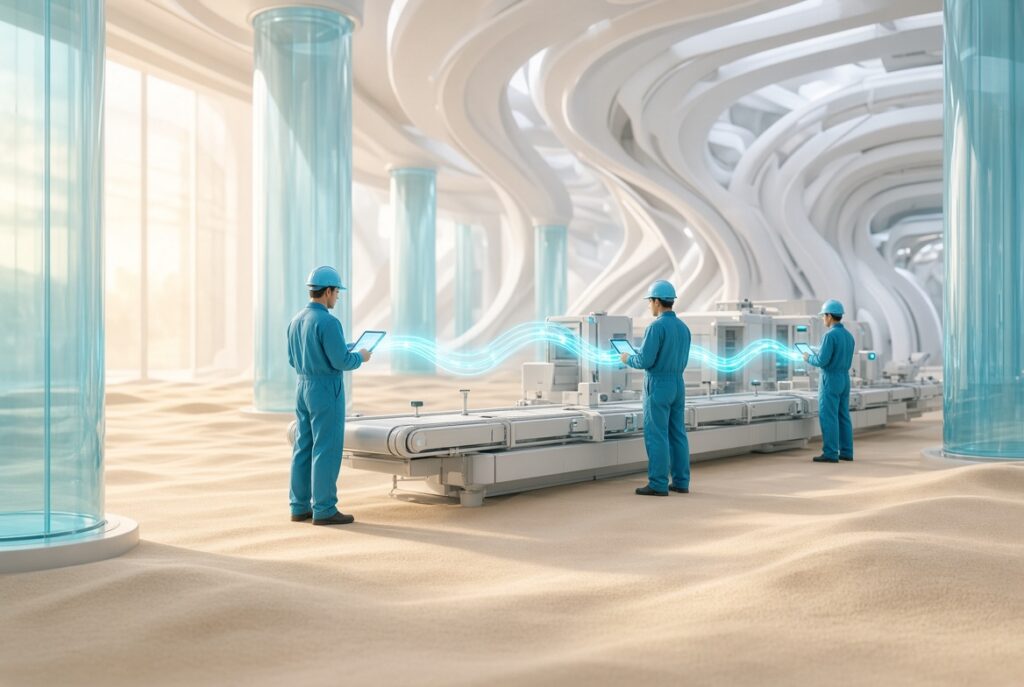
Vision systems are sets of hardware and software. They use cameras and image-processing algorithms to analyze and interpret images. These systems make it possible to automatically identify, measure, inspect, and sort various production components.
Examples of the use of vision systems in manufacturing:
- Quality Control – Vision systems can automatically detect product defects on the production line, allowing for their quicker elimination and ensuring a higher-quality final product.
- Assembly Automation – Cameras and image-processing algorithms can assist robots in the precise assembly of components, thereby speeding up the production process.
- Tracking and Identification – Thanks to vision systems, products can be automatically identified and tracked throughout the entire production line.
Benefits of using vision systems in the manufacturing process:
- Increased Efficiency – Automating many processes using vision systems enables faster product processing and shorter production times.
- Quality Improvement – The ability to quickly detect and eliminate defects significantly raises the quality standard of the manufactured goods.
- Cost Reduction – Fewer errors and process optimization translate into significant savings for businesses.
- Improved Safety – Video surveillance systems can monitor areas with a high risk of accidents, ensuring greater safety for employees.
The Evolution of Employee Roles in the Age of Industry 4.0
The Industry 4.0 era, often referred to as the Fourth Industrial Revolution, is bringing about fundamental changes in the way industry operates. This applies not only to technology and processes, but also to the roles and responsibilities of employees. What major changes await employees in this new industrial reality?

Changes in Human Resource Management in the Era of Industry 4.0
In the context of Industry 4.0, where automation and modern vision systems dominate the industrial sector, the human aspect remains extremely important. In the era of the Fourth Industrial Revolution, modern human resources (HR) management tools must be able to meet new challenges while ensuring effective communication, tracking team progress, and maintaining a safe work environment.

1. Automation of Routine Tasks
Periodic evaluations are crucial for the development of both individual employees and the organization as a whole. WinWin automates this process, providing management and the team with a clear picture of achievements and identifying areas for further development and improvement.
2. Reporting Health and Safety Hazards and Near-Miss Incidents
Employee safety is a priority in every organization. By enabling employees to report potential hazards and situations that could lead to accidents, the risk of more serious incidents is significantly reduced.
3. Remote Work and Flexibility
Thanks to digital technologies, many processes can be monitored remotely. For office workers, this means more opportunities to work remotely and a more flexible approach to work hours.
4. New Roles and Specializations
As technology advances, new professional roles are emerging. Data analysts, robot programmers, and cybersecurity experts are just a few of the new professions that are gaining importance in the Industry 4.0 era.
5. Continuous Learning and Adaptation
The rapid pace of technological change requires employees to continuously upgrade their skills and acquire new ones. Industry 4.0 will reward those who are open to learning and able to adapt to changing conditions.
6. The Growing Importance of Teamwork
Although technology plays a key role in Industry 4.0, the human element remains irreplaceable. The ability to work in teams, communicate, and collaborate is becoming essential in a complex industrial environment.

Digitization in the areas of performance reviews, feedback, reporting violations, and initiatives
In the world of Industry 4.0, where digitization and vision systems are transforming traditional production methods, human resources management tools play a key role. Modern companies seeking to gain a competitive edge in the Industry 4.0 era must focus not only on technology but also on optimizing and developing their teams. In this regard, employee ranking systems are becoming an integral part of modern HR strategies.
WinWin is an example of such an innovative system. What makes it unique?
Automation of Performance Reviews: In the age of digitalization, WinWin ensures objective and fact-based employee evaluations. The system collects data on employee performance, enabling an accurate and fair analysis of the feedback they’ve received and the generation of reports with just a few clicks.
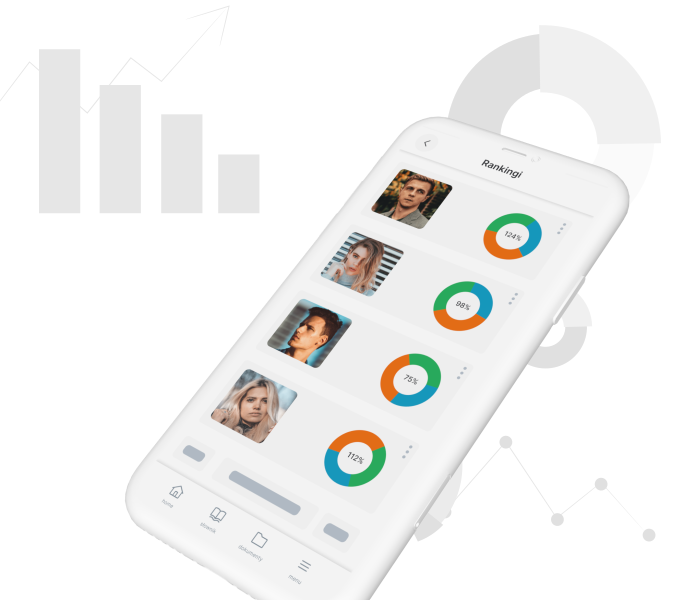
Employee rankings based on video analytics: WinWin enables you to create employee rankings based on various metrics, ranging from efficiency and engagement to specific skills. This allows you to identify your most valuable team members and motivate others to improve their skills.
Competency Matrices in the Age of Digitalization: Understanding which skills are essential for various positions and where competency gaps exist is critical to a team’s development strategy. WinWin provides digitized competency matrices that help with effective talent management and production process planning.
Identifying Key Employees: WinWin enables the collection of data that managers can use to identify key employees, relying not only on their intuition but also on data that reflects employees’ actual work and its results.
Summary
The Fourth Industrial Revolution is not just about machines and technology, but above all about the people who must adapt to new realities. In the era of Industry 4.0, employees face challenges, but also many opportunities. For those who are ready to learn, adapt, and grow, the future of industry can offer many rewarding and innovative career paths.
In Industry 4.0, where digitization and machine vision systems play a central role, tools such as WinWin are essential for effective team management and development, which in turn leads to the success of the entire organization.