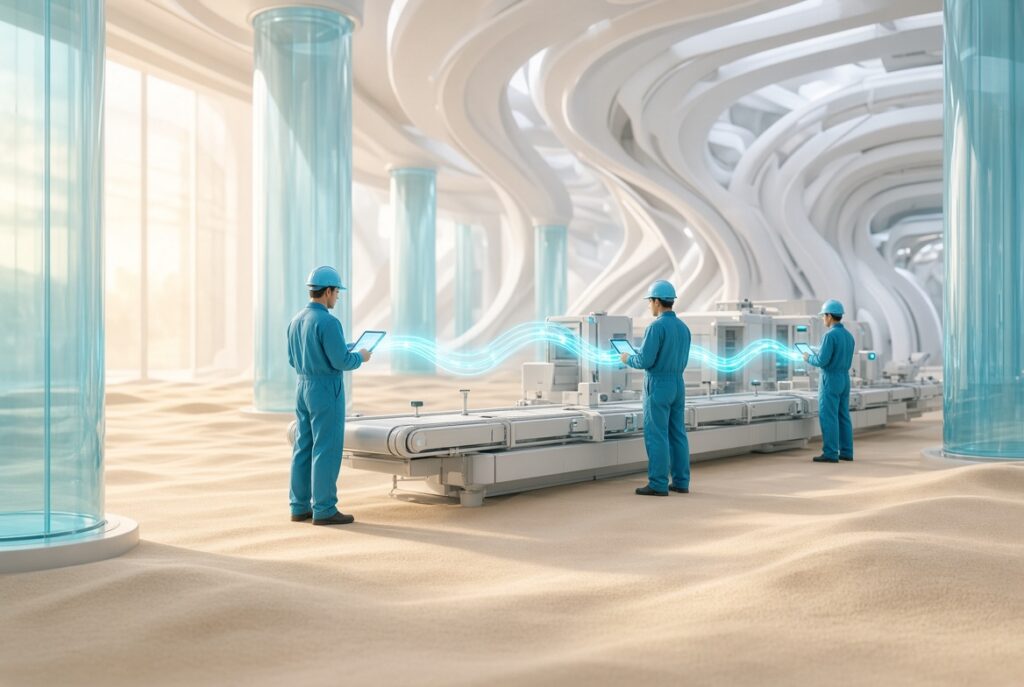
Industry 4.0 is characterized by a combination of advanced digital technologies, data analytics, and smart manufacturing processes. In this article, we’ll delve into the fascinating world of Industry 4.0, exploring its impact on various sectors, its key components, and the exciting opportunities it holds for the future.
Introduction
Industry 4.0, also known as Industry 4.0, represents a breakthrough in the industrial landscape. This convergence of modern technologies is changing the way we produce, manufacture, and deliver goods and services. Let’s take a closer look at this transformative phenomenon.
Industry 4.0 – Definition
Industry 4.0, also known as the Fourth Industrial Revolution, is a groundbreaking industrial paradigm characterized by the integration of advanced digital technologies into manufacturing and industrial processes. This marks a new era of industrialization that leverages technologies such as the Internet of Things (IoT), artificial intelligence (AI), big data analytics, robotics, and cyber-physical systems.
In Industry 4.0, physical and digital systems are interconnected, enabling real-time data exchange and intelligent decision-making. This integration of technologies increases production efficiency and flexibility while reducing operating costs. It also enables the creation of smart factories and supply chains that can quickly adapt to changing needs and optimize resource utilization.
The core elements of Industry 4.0 include data-driven insights, automation, machine learning, predictive maintenance, and the use of digital twins (virtual replicas of physical assets) for monitoring and control. The ultimate goal of Industry 4.0 is to revolutionize industries, making them more agile, connected, and capable of delivering personalized products and services with minimal waste.

Industry 4.0 vs. Industry 3.0 – Differences
The transition from Industry 3.0 to 4.0 represents a significant step forward in manufacturing and industrial processes. Let’s take a look at the main differences between these two industrial revolutions:
Industry 3.0: The Third Industrial Revolution
- Automation and Robotics: Industry 3.0 introduced automation and the use of robotics to streamline production processes. This marked the beginning of machines taking over repetitive tasks.
- Computerization: This era marked the beginning of the use of computers for process control and automation. This laid the foundation for digitization in manufacturing.
- Mass Production: Industry 3.0 was characterized by mass production techniques, enabling the mass production of standardized products.
- Limited Communication: The level of communication between machines and systems was limited. Communication was primarily one-way, from the central control system to the machines.
Industry 4.0: The Fourth Industrial Revolution
- Technology Integration: Industry 4.0 integrates a variety of advanced technologies, including the Internet of Things (IoT), artificial intelligence (AI), big data, and many others. This represents a holistic approach to digitalization.
- Data-Driven Decisions: Data plays a key role in Industry 4.0. Real-time data collection and analysis enable data-driven decision-making at all levels of production. Discover WinWin!
- Customization and Flexibility: Unlike mass production, Industry 4.0 enables customization and flexibility. Smart factories can quickly adapt to the production of different products with minimal downtime.
- Interconnectivity: Industry 4.0 emphasizes interconnectivity between machines, systems, and even entire supply chains. Machines communicate with each other and with central control systems in both directions.
- Smart Manufacturing: Introduces the concept of “smart manufacturing,” where machines are not only automated but also intelligent. They are capable of learning and optimizing processes autonomously.
- Cyber-Physical Systems: Industry 4.0 is blurring the lines between the physical and digital worlds. Cyber-physical systems are a fundamental aspect of this, where digital replicas of real-world assets exist for monitoring and control purposes.
- Sustainable Development: In Industry 4.0, greater emphasis is placed on sustainable development, with the goal of reducing waste, optimizing resource use, and adopting environmentally friendly practices.
In summary, Industry 4.0 represents a more comprehensive and interconnected approach to manufacturing compared to Industry 3.0. It harnesses the power of data, automation, and intelligence to create highly adaptive and efficient manufacturing systems, paving the way for a new era of industry and innovation.

Key Technologies Driving Industry 4.0
- IoT (Internet of Things): Sensors and devices collect data from machines and products, enabling real-time monitoring and analysis.
- Big Data and Analytics: Vast amounts of data are processed to gain insights, streamline processes, and make predictions.
- Artificial Intelligence (AI): AI algorithms optimize operations, improve quality control, and enable autonomous decision-making.
- Robotics: Robots are used to perform repetitive tasks, ensuring precision and consistency in production.
Impact on Production
Improved Performance
Industry 4.0 streamlines manufacturing processes by reducing downtime and waste. Smart machines can adjust settings in real time to optimize production.
Smart Factories
Factories equipped with Industry 4.0 technologies are highly flexible. They can quickly switch between products and efficiently adapt to orders.
Supply Chain Optimization
Real-time data from the supply chain enables better demand forecasting and inventory management.
Industry 4.0 in Healthcare
Telemedicine and Remote Monitoring
Patients can receive remote medical care through telemedicine, and IoT devices monitor their health.
Artificial Intelligence-Driven Diagnostics
AI can analyze medical images and patient data, speeding up diagnoses and improving their accuracy.
The Evolution of the Automotive Industry
Connected and Autonomous Vehicles
Industry 4.0 is driving the development of driverless cars and connected vehicles.
Scheduled Maintenance
Sensors in vehicles anticipate maintenance needs, reducing breakdowns and improving safety.
Agriculture in the Digital Age
Precision Agriculture
Farmers use data to optimize planting, irrigation, and harvesting, thereby increasing crop yields.
IoT in Agriculture
Sensors in the fields and on livestock provide valuable information for better farm management.
Challenges and Concerns Related to Industry 4.0
Although Industry 4.0 has enormous potential, it also presents challenges, such as cybersecurity risks, concerns about data privacy, and the need for a skilled workforce.
Sustainable Development and Industry 4.0
Industry 4.0 can promote sustainable development through the efficient use of resources, waste reduction, and environmentally friendly practices.
Future Prospects
The future of Industry 4.0 looks promising. As technology continues to advance, industries will become even more connected and efficient.
Summary
Industry 4.0 is revolutionizing industries around the world, ushering in a new era of efficiency, productivity, and innovation. Embracing this transformation is essential for companies that want to succeed in the digital age.
FAQ (Frequently Asked Questions)
- What is Industry 4.0? Industry 4.0, also known as Industry 4.0, refers to the integration of digital technologies—such as the Internet of Things (IoT), artificial intelligence (AI), and robotics—into industrial processes to increase efficiency and productivity.
- How does Industry 4.0 impact manufacturing? It increases efficiency, enables smart factories, and optimizes the supply chain, reducing costs and improving quality.
- What are the challenges of Industry 4.0? These challenges include cybersecurity risks, concerns about data privacy, and the need for a skilled workforce to manage advanced technologies.
- Can Industry 4.0 contribute to sustainable development? Yes, it can. Industry 4.0 promotes sustainable development through resource optimization, waste reduction, and environmentally friendly practices.
- What does the future hold for Industry 4.0? The future looks promising, and further technological advances will drive greater connectivity and efficiency across industries.
In this digital age, Industry 4.0 is transforming industries, and companies must adapt to succeed. Embracing these technological advancements can lead to increased competitiveness and sustainable development, ensuring a promising future for everyone.