
In large manufacturing organizations, a culture of feedback can take years to develop—and sometimes it doesn’t develop at all. This is a natural consequence of the focus on operations, standards, results, and safety. Leaders and foremen focus on executing the plan, and if processes run smoothly, soft communication takes a back seat. As a result, employees perform their tasks correctly but often without knowing what they’re doing well and which behaviors are worth reinforcing.
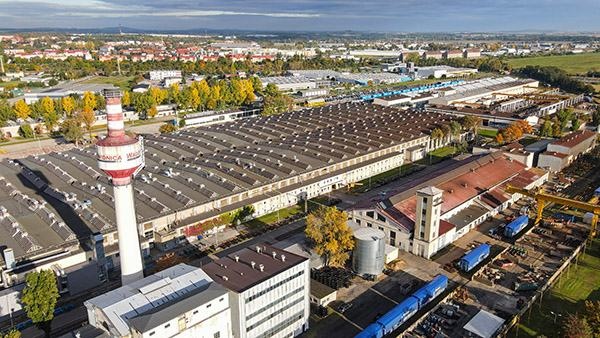
At Greenbrier Poland—a freight car manufacturing plant in Świdnica, part of the global Greenbrier Group—this situation had persisted for years. The company, which operates in the heavy industry sector and upholds strong quality and safety standards, recognized that it could do more when it came to its people.
Lack of a common standard for feedback
Greenbrier Poland entered the project with very specific business and HR needs. The organization lacked a uniform standard for providing feedback, and communication between leaders and employees was largely based on intuition.
“We didn’t have any tools, and we didn’t have that kind of feedback culture in our organization… Feedback worked more along the lines of: if I don’t say anything to you, it means you’re doing everything right.”
In practice, this meant that feedback was provided only sporadically, and leaders lacked a common standard that would allow them to act consistently and in a way that was predictable for employees.
A multigenerational crew, different needs
Another challenge was generational differences. The company employs people with several decades of experience as well as members of younger generations who are accustomed to more direct and frequent feedback.
“There are a lot of people in our organization who have been working here for 30 to 40 years… and the younger generations are looking for exactly that kind of feedback, that message: Am I doing well, or am I doing poorly?”
This created conflicting expectations of leaders and a need for a tool that would bridge these differences and standardize communication.
The impetus to implement the WinWin App came from the ground up—an employee suggested taking a look at the solution used at one of Greenbrier’s plants in Romania. After a study visit and discussions with the team there, the decision was made.
The organization wanted to ensure that WinWin did not become “just another spreadsheet,” but rather a source of real support for leaders and a foundation for cultural change. That is why, from the very beginning, a wide range of modules was implemented: positive behaviors, corrective actions, health and safety violations, Kaizen initiatives, NIR, and reports.
WinWin was the first tool to bring consistency and structure to everyday communication.
"It's a tool for communication. For building relationships."
The app helped leaders respond to employees’ current behaviors: briefly, simply, and based on facts. As a result, conversations—which had previously been seen as an extra effort—began to become a natural part of the day.

Training was a key element. Many leaders were promoted from hands-on roles, where working with a team on soft skills wasn’t always part of their daily routine. The workshops emphasized a principle that became the foundation of the entire system—we record only facts.
“During the training sessions, we talked about facts… and you can’t argue with facts… We wanted to avoid an escalation of negative emotions.”
Equally important was communicating extensively with the staff. Flyers, posters, and instructions were prepared in several languages, ensuring that every employee understood what the system was and why it was being implemented.
“We had flyers in Polish, English, and Ukrainian… the entire crew was included in the program.”
In practice, WinWin fit best into the rhythm of production work—where decision-making and the ability to observe behavior are greatest. That is why manual laborers became the app’s primary users.
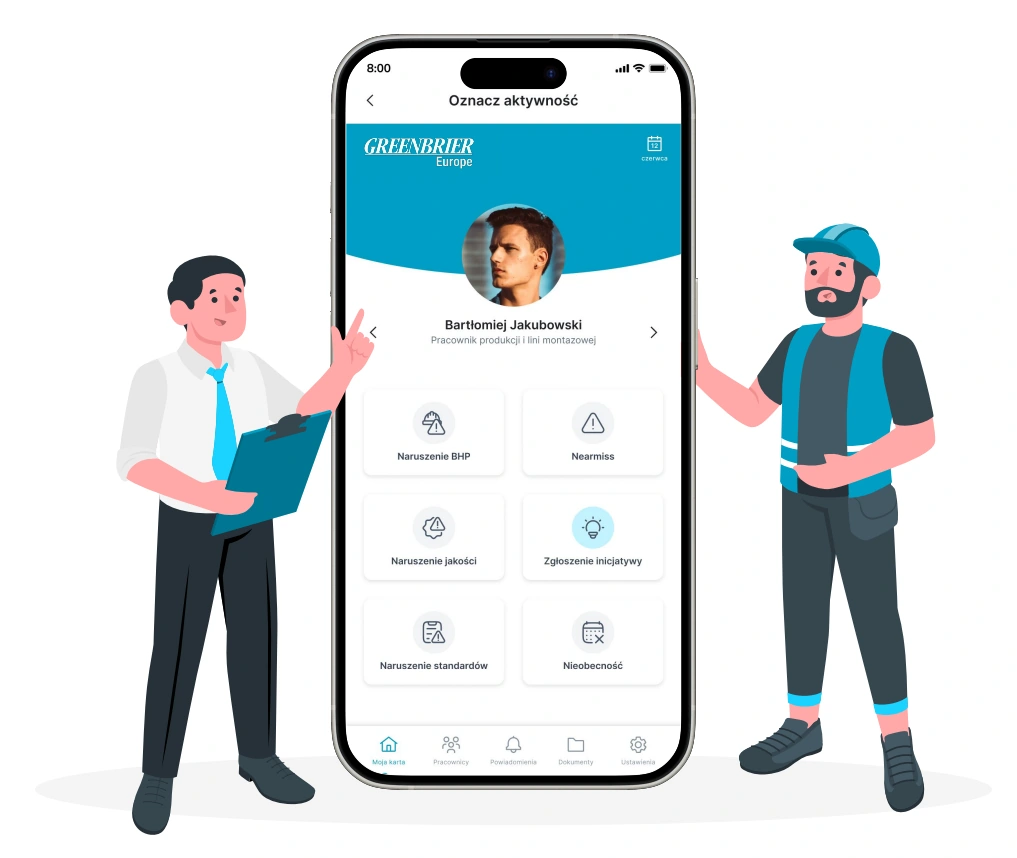
Since the implementation of the WinWin App, the most significant change has been in the frequency and quality of leader-employee interactions. Feedback has become the norm rather than the exception. Employees hear more often what they’re doing well, and leaders have a tool that helps them conduct regular conversations.
"It's definitely a great tool when it comes to communicating with your supervisor and getting feedback."
Greenbrier has evolved from an organization where feedback was rare and unstructured to a place where positive behaviors are recognized on an ongoing basis and leaders foster a culture of safety, engagement, and accountability.
This is a cultural shift, not just a technological one. A shift that began with the need for a simple tool and evolved into an everyday practice of conversation and appreciation.
“WinWin is a tool that truly supports my day-to-day work—it allows me to manage Kaizen proposals in a transparent way, enables me to provide reliable and well-founded feedback, both positive and negative, and lets me evaluate employees based on clearly defined criteria in areas where they truly deserve it.”