
Introduction
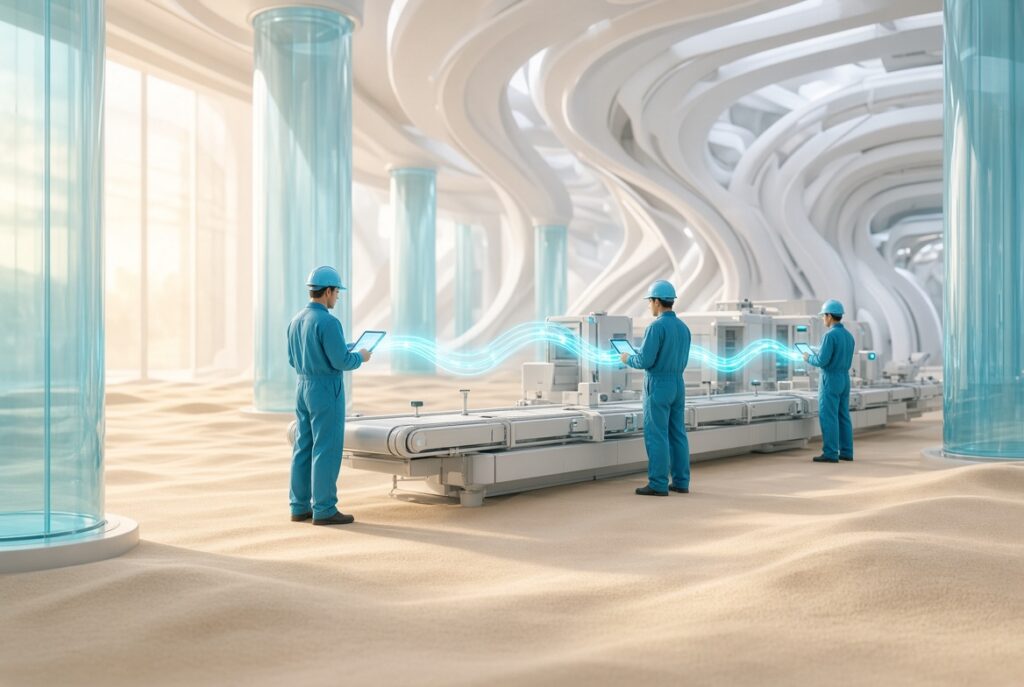
Industry 4.0 is a term that is increasingly used in the context of manufacturing. It refers to a revolution in the way we manufacture and manage production. Industry 4.0 leverages the latest technologies, such as the Internet of Things (IoT), artificial intelligence (AI), and data analytics, to create more efficient, flexible, and integrated manufacturing systems. The adoption of Industry 4.0 is having a huge impact on the manufacturing industry, transforming it for the better.
What Is Industry 4.0? – Definition
Industry 4.0 is a concept that refers to the Fourth Industrial Revolution. It involves the use of the latest technologies to automate and digitize manufacturing processes. The key features of Industry 4.0 are: automation, machine-to-machine communication, real-time data analysis, flexibility, and product customization.
How does Industry 4.0 affect manufacturing?
Industry 4.0 represents a significant evolution in the technological and organizational aspects of business operations. It is a trend that emphasizes the integration of the entire value chain, the development of innovative business models, and the digitization of products and services. The key to successfully implementing this concept lies in the use of modern digital technologies, effective data management, and enabling seamless communication between machines, devices, and people. The main driving force behind Industry 4.0 is the growing desire to meet individual customer expectations and the emerging trend of tailoring products and services to their specific needs.
Automation of Manufacturing Processes in the Era of Industry 4.0
The automation of manufacturing processes is a key element of Industry 4.0. This involves replacing workers with machines and robots that perform repetitive and monotonous tasks. Automation offers many benefits, such as increased productivity, reduced costs, and improved product quality. Automation also makes it possible to enhance workplace safety, as certain tasks can be performed by machines instead of people. The automation of manufacturing processes is a key element of Industry 4.0 because it enables the creation of more efficient and flexible production systems.
Benefits of Implementing Industry 4.0
The implementation of Industry 4.0 offers many benefits for manufacturing companies. One of the main benefits is increased competitiveness and profitability. Thanks to the automation and digitization of manufacturing processes, it is possible to boost productivity and reduce costs. Furthermore, Industry 4.0 enables the creation of more personalized products that better meet customer expectations. This leads to increased customer satisfaction and brand loyalty. Another benefit of Industry 4.0 is improved sustainability and a reduced environmental impact. Thanks to more efficient manufacturing processes, it is possible to reduce energy consumption and CO2 emissions.
The Impact of Industry 4.0 on Production Management
Industry 4.0 has a significant impact on production management. One of the main changes is the shift from centralized decision-making to decentralized decision-making. Thanks to Industry 4.0, employees at various levels of the organization have access to real-time data and can make decisions based on that information. This leads to faster decision-making and a better response to changing market conditions. Another change is increased collaboration and communication between different departments and levels of the organization. Thanks to Industry 4.0, employees can easily exchange information and work together to solve problems.
Challenges in Implementing Industry 4.0
The implementation of Industry 4.0 involves many challenges. One of the main challenges is the allocation of costs and resources. Introducing new technologies and systems can be costly, especially for small and medium-sized enterprises. Furthermore, implementing Industry 4.0 requires appropriate training and education for employees. New technologies and processes can be difficult for employees to understand and use, so it is important to provide adequate training and support. Another challenge is integration with existing systems and processes. Introducing new technologies and systems may require changes to existing processes and systems, which can be difficult and costly.

The 7 Key Stages of Industry 4.0
According to analyses by the European Center for Advanced Manufacturing, the evolution toward Industry 4.0 consists of seven key stages.
The first of these focuses on technological progress, emphasizing the flexibility of production systems that efficiently adapt to the variety and volume of units produced.
The second stage emphasizes the importance of sharing information about the production process among people, machines, and the final product.
The third step focuses on implementing the principles of the circular economy to make the most of available raw materials and minimize emissions.
The fourth stage, known as End-to-End Customer-Focused Engineering, focuses on comprehensively meeting customer needs.
Step 5 emphasizes the role of people in the organization by leveraging their unique abilities and creating a welcoming workplace.
The sixth stage, known as smart manufacturing, involves the use of integrated systems that dynamically adapt to current conditions, with an emphasis on collecting and sharing large amounts of data.
The final, seventh stage presents a vision of an open factory that fully understands and meets the expectations of all participants in the production process.
The Impact of Industry 4.0 on Employment
Industry 4.0 has a significant impact on employment. The introduction of automation and digitization in manufacturing processes can lead to changes in employees’ roles and skills. Some tasks that were previously performed by people can now be performed by machines and robots. Therefore, it is important for employees to receive training and acquire the new skills needed in the era of Industry 4.0. Industry 4.0 also places greater emphasis on technical skills and the ability to work with new technologies.
Unlike previous approaches, such as CIM (Computer-Integrated Manufacturing), Industry 4.0 does not aim to create factories devoid of people and staffed solely by robots. Industry 4.0 transforms manufacturing facilities into more employee-friendly workplaces. The role of humans remains crucial, and modern technologies (such as WinWin) provide them with even greater support than ever before.
Technologies Used in Industry 4.0
Industry 4.0 utilizes a wide variety of technologies. One of the key technologies is the Internet of Things (IoT), which enables communication between devices and real-time data analysis. Another important technology is artificial intelligence (AI), which enables machines and robots to make decisions based on data analysis. Big Data and data analytics are also important technologies in Industry 4.0, as they enable the analysis of large amounts of data and the use of that information for decision-making. 3D printing, also known as additive manufacturing, is another important technology in Industry 4.0. It allows for the creation of three-dimensional objects using a 3D printer.
Examples of Successful Industry 4.0 Implementations
There are many examples of companies that have successfully implemented Industry 4.0. One such example is the German company Bosch, which uses the Internet of Things (IoT) to monitor and optimize its manufacturing processes. As a result, the company achieves greater efficiency and reduces costs. Another example is the American company General Electric, which uses artificial intelligence (AI) to analyze data and optimize its manufacturing processes. As a result, the company achieves higher product quality and increases productivity.

How can WinWin help you implement Industry 4.0 in your manufacturing company?
WinWin can help implement Industry 4.0 in the following ways:
- Systems Integration: WinWin offers tools for integrating various production systems, which is key to Industry 4.0. This allows companies to connect their legacy systems with new technologies.
- Data Analysis: One of the main pillars of Industry 4.0 is data analysis. WinWin builds a long-term record of an employee’s work history, which helps companies collect, analyze, and interpret data in real time, thereby enabling better decision-making.
- Process Automation: WinWin offers solutions for automating performance review processes, enabling companies to save many hours of work each year and reduce costs.
- Security: In the digital age, security is crucial. WinWin is a secure IT system with GDPR certifications and a history of successful penetration tests.
- Training and Education: To fully realize the potential of Industry 4.0, employees must be properly trained. WinWin offers a competency matrix and a package of implementation and training services.
- Technical Support: Implementing Industry 4.0 can be complex. That’s why WinWin offers technical support to help companies navigate this process. In addition, customers are assigned account managers and have access to a HelpDesk to assist with any issues related to using the system.
- Customizing Solutions: Every company is different and may require a tailored approach. WinWin is able to customize its solutions to meet the specific needs of each client. To meet our clients’ needs, we have developed modules such as self-assessment, automatic bonus calculation, and monthly reports, which provide deep insight into the organization.
- Cloud Connectivity: Industry 4.0 is about connecting physical and digital systems. WinWin can help companies integrate with the cloud, enabling better management of data and resources.
- Innovation: WinWin stays up to date with the latest trends and technologies, which allows companies to always stay one step ahead of the competition. Our clients call the WinWin system a driver of efficiency.
In summary, WinWin is a key partner for companies looking to implement Industry 4.0, offering support at every stage of the process.
The Impact of Industry 4.0 on the Development of New Business Models
Industry 4.0 has a major impact on the development of new business models. One of the main trends is the shift from a product-based model to a service-based model. Companies are increasingly offering not only products but also related services. For example, a machinery manufacturer may offer not only the sale of machines but also service and maintenance. Another trend is the growing importance of innovation and flexibility in adapting to changing market conditions. Companies must be more innovative and flexible to survive in the era of Industry 4.0.
Summary
Industry 4.0 is a revolution in the way we manufacture and manage production. It leverages the latest technologies, such as the Internet of Things (IoT), artificial intelligence (AI), and data analytics, to create more efficient, flexible, and integrated manufacturing systems. Industry 4.0 offers many benefits, such as increased competitiveness and profitability, improved customer satisfaction, and a reduced environmental impact. However, the implementation of Industry 4.0 also presents challenges, such as the allocation of costs and resources, employee training, and integration with existing systems. Therefore, it is important for companies to be prepared to adopt Industry 4.0 and adapt to changing market conditions.